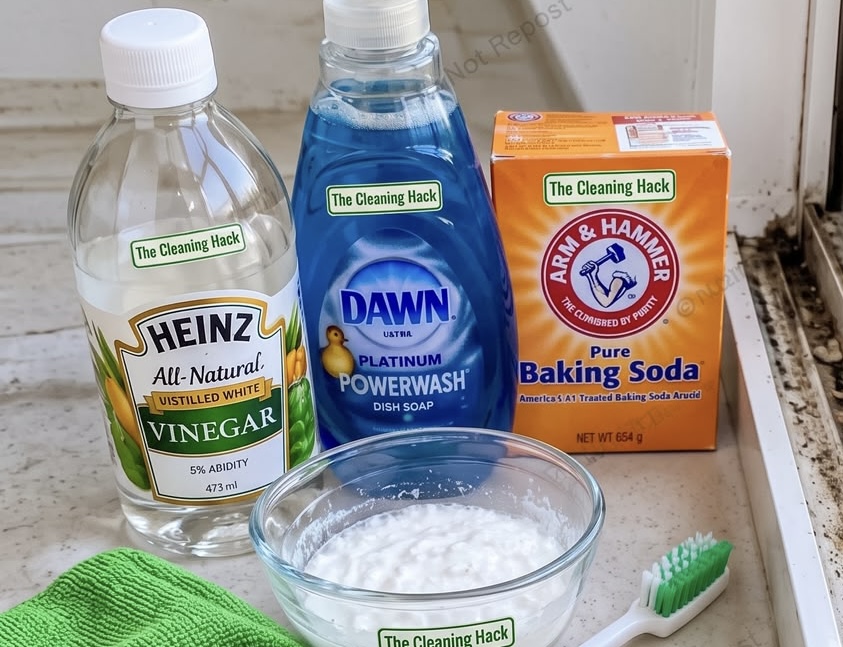
Window tracks are one of those areas that are easy to overlook during regular cleaning. Dust, hair, dead insects, grease, and everyday grime can quickly collect inside the narrow grooves, making them difficult to clean with a regular cloth.
This simple DIY window track cleaner combines baking soda, dish soap, and white vinegar to help loosen stubborn buildup. With a small brush and a microfiber cloth, you can clean those hard-to-reach areas and leave your window tracks looking fresh again.
Cleaning Solution Overview
| Detail | Information |
| Preparation Time | 5 minutes |
| Cleaning Time | 10–15 minutes |
| Total Time | About 20 minutes |
| Difficulty | Easy |
| Best For | Window tracks, grooves, corners, and frames |
| Main Ingredients | Baking soda, dish soap, white vinegar |
| Tools | Small brush, microfiber cloth |
Why You’ll Love This DIY Window Track Cleaner
This homemade cleaner uses simple household ingredients that are inexpensive and easy to find.
The baking soda provides gentle scrubbing power, while dish soap helps loosen oily dirt and grime.
The small brush makes it much easier to reach narrow grooves and corners where dust and debris tend to accumulate.
It is also quick to prepare, making it convenient for regular household cleaning.
Ingredients
| Ingredient | Amount |
| Baking soda | ½ cup |
| Dish soap | ¼ cup |
| White vinegar | ½ cup |
Cleaning Ratio
The basic ratio is:
½ cup baking soda : ¼ cup dish soap : ½ cup white vinegar
If you only need a small amount, reduce all three ingredients proportionally.
Tools Needed
| Tool | Purpose |
| Small cleaning brush or old toothbrush | Scrubbing grooves and corners |
| Microfiber cloth | Wiping away loosened dirt and residue |
| Small bowl | Mixing the ingredients |
Step-by-Step Instructions
Step 1: Prepare the Cleaning Mixture
Add ½ cup of baking soda and ¼ cup of dish soap to a small bowl.
Slowly add ½ cup of white vinegar.
The mixture will fizz because vinegar is acidic and baking soda is alkaline. Add the vinegar gradually to help prevent the mixture from overflowing.
Step 2: Apply It to the Window Tracks
Apply the mixture generously along the dirty window tracks.
Make sure the paste reaches the grooves, corners, and other areas where dirt has accumulated.
Step 3: Let It Sit
Allow the mixture to sit for approximately 5 to 10 minutes.
This gives the dish soap and baking soda time to work on the accumulated grime while the fizzing reaction helps loosen debris.
Do not allow the mixture to dry completely on the surface.
Step 4: Scrub the Tracks
Using a small brush or old toothbrush, scrub the window tracks thoroughly.
Pay special attention to tight corners, grooves, and areas underneath the window frame where dirt can be difficult to reach.
For particularly dirty areas, apply a little more cleaning mixture and scrub again.
Step 5: Wipe Everything Clean
Use a damp microfiber cloth to remove the loosened dirt, cleaning paste, and residue.
For very dirty tracks, rinse or wring out the cloth several times as you work.
Finish with a clean, slightly damp microfiber cloth and then dry the tracks thoroughly.
Best Tips for Cleaner Window Tracks
Vacuuming loose dust and debris from the tracks before applying the cleaner can make the process easier and prevent you from turning dry dirt into a muddy paste.
Use an old toothbrush for narrow tracks because its small bristles can reach corners that larger cleaning brushes cannot.
Work in small sections if your window tracks are heavily soiled.
Do not pour large amounts of liquid into the window tracks, especially if the window system contains drainage holes or components that should not become saturated.
Always test the mixture on a small, inconspicuous area first, particularly if the window frame has a special finish or delicate coating.
Best Ingredient Options
A mild dish soap is usually a practical choice for this type of household cleaning.
Plain white vinegar is preferable to colored or scented vinegar when cleaning light-colored surfaces because it reduces the possibility of unwanted staining.
Fresh baking soda is useful when you want gentle abrasive action to help loosen stuck-on grime.
Cleaning Variations
For lightly dusty window tracks, you may not need the full mixture. A small amount of dish soap diluted with warm water can be enough for routine cleaning.
For stubborn dry debris, start by brushing or vacuuming the track before applying the cleaning mixture.
For narrow grooves, use a toothbrush, small detailing brush, or cotton swab to reach areas that are difficult to access.
What to Do After Cleaning
Once the window tracks are clean and dry, inspect the drainage openings and remove any visible debris that could interfere with water drainage.
Keeping the tracks relatively dry and free from loose dirt can make future cleaning much easier.
Make-Ahead Instructions
For best results, prepare this cleaning mixture immediately before use.
Because baking soda and vinegar react when combined, there is little advantage to storing the finished mixture for later use.
Instead, mix only the amount you need for the cleaning session.
Storage
Store the individual ingredients separately in their original containers.
Do not seal a container containing an active baking soda and vinegar mixture because the reaction produces carbon dioxide gas.
Common Mistakes to Avoid
Using too much liquid: Excess moisture can make window tracks unnecessarily wet and may allow dirty water to spread into surrounding areas.
Skipping the dry debris removal: Vacuuming or brushing away loose dirt first can make the cleaning process much more effective.
Scrubbing too aggressively: Excessive pressure can potentially scratch or damage delicate finishes, so use gentle pressure and increase it only when appropriate for the surface.
Leaving residue behind: Always wipe the tracks thoroughly after scrubbing. Remaining baking soda, soap, or dirt can leave a cloudy or gritty residue.
Using the mixture without testing: Different window materials and finishes can react differently to cleaning products. Test a small hidden area first.
Frequently Asked Questions
Can I use this cleaner on all window tracks?
Not necessarily. Window tracks can be made from different materials and may have painted, coated, anodized, or other finishes. Test the solution on an inconspicuous area first and follow the manufacturer’s cleaning recommendations when available.
How often should I clean window tracks?
For most homes, cleaning every few months can help prevent heavy buildup. Homes with lots of dust, pets, or frequent window use may require more frequent cleaning.
Can I use an old toothbrush?
Yes. An old, clean toothbrush is particularly useful for narrow grooves and corners.
Do I need to let the mixture sit for 10 minutes?
Not always. For lightly soiled tracks, a shorter contact time may be sufficient. For heavier buildup, allowing it to sit for several minutes can help loosen the grime before scrubbing.
Can I use this mixture on window glass?
This recipe is specifically intended for dirty window tracks rather than as a general glass-cleaning solution. For glass, use a suitable glass cleaner or a cleaning method recommended for your particular windows.
Why does the mixture fizz?
The fizzing occurs because baking soda reacts with the acid in white vinegar, producing carbon dioxide gas. The visible bubbling is a chemical reaction rather than a sign that the mixture is becoming a stronger cleaner.
Final Thoughts
Dirty window tracks can make otherwise clean windows look neglected, but you do not need complicated equipment to tackle the buildup.
With baking soda, dish soap, white vinegar, a small brush, and a microfiber cloth, you can give your window tracks a thorough cleaning in just a few simple steps.
For the best results, remove loose debris first, apply the cleaner in moderation, scrub the grooves carefully, and wipe everything completely clean and dry.