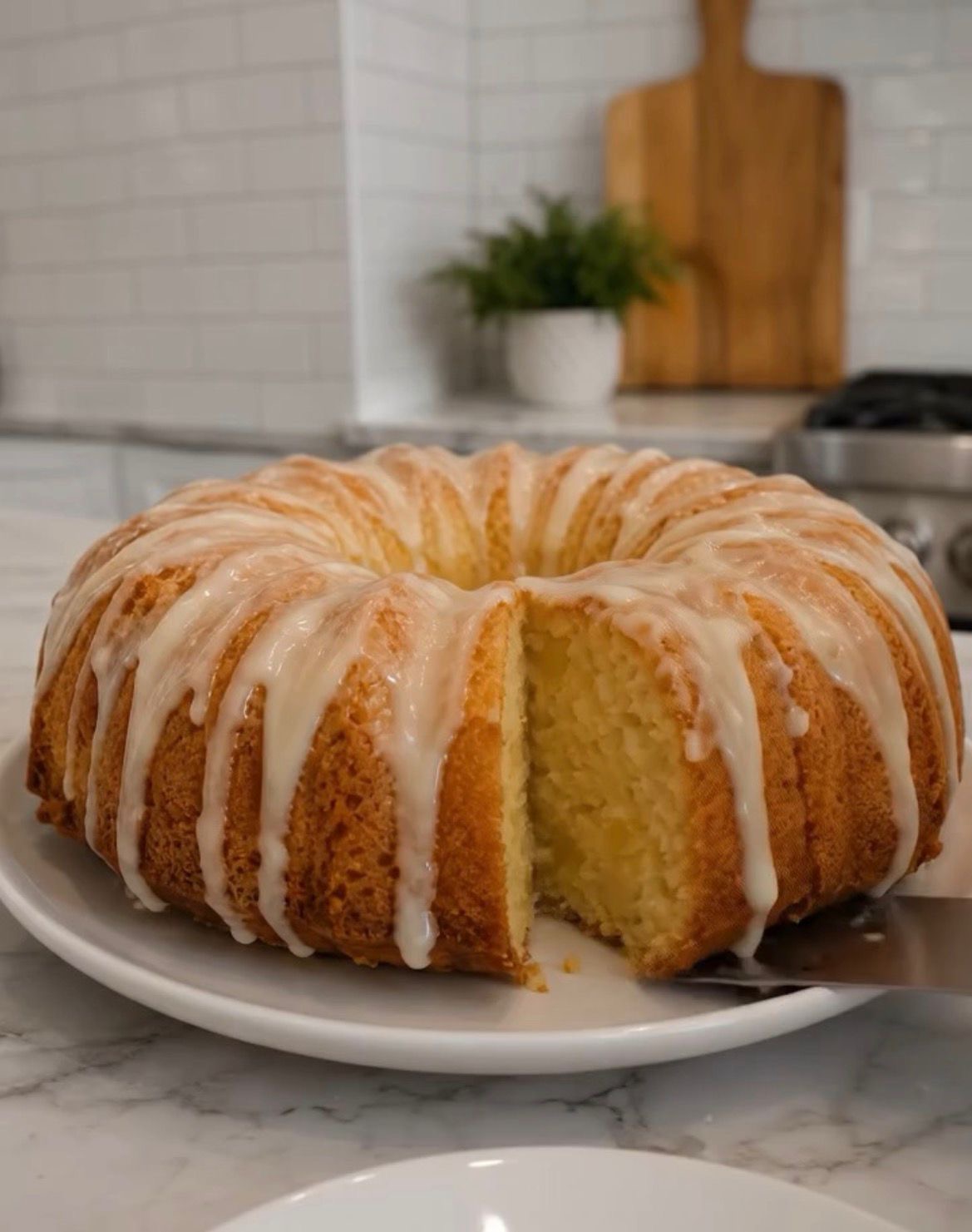
Classic Glazed Vanilla Bundt Cake 🍰✨
Introduction
This Classic Glazed Vanilla Bundt Cake is a beautiful homemade dessert with a golden, lightly crisp crust, a soft and tender interior, and a smooth vanilla glaze that drips naturally over every curve of the cake.
Made with simple pantry ingredients, this traditional vanilla Bundt cake is easy enough for a weekend bake but elegant enough for birthdays, holidays, afternoon tea, and family celebrations.
The buttery vanilla flavor pairs perfectly with the sweet glaze, while the distinctive Bundt shape makes the cake look impressive without requiring complicated decorating skills.
Recipe Overview
| Feature | Details |
| Prep Time | 20 minutes |
| Bake Time | 50–60 minutes |
| Cooling Time | 30–45 minutes |
| Glazing Time | 10 minutes |
| Total Time | About 1 hour 45 minutes |
| Yield | 12–14 servings |
| Pan | 10–12 cup Bundt pan |
| Difficulty | Easy |
| Cuisine | American |
| Course | Dessert |
Why You’ll Love This Recipe
Classic vanilla flavor: Butter and vanilla create a simple but delicious flavor combination.
Beautiful presentation: The Bundt pan creates an elegant shape without complicated decoration.
Tender crumb: Properly creamed butter and sugar help produce a light, tender texture.
Easy glaze: The vanilla glaze requires only three ingredients and takes just a few minutes to prepare.
Perfect for gatherings: One cake provides plenty of slices for family dinners, parties, holidays, and celebrations.
Ingredients
For the Vanilla Bundt Cake
| Ingredient | Quantity | Notes |
| All-purpose flour | 3 cups / about 375 g | Spoon and level |
| Granulated sugar | 2 cups / 400 g | Regular white sugar |
| Unsalted butter | 1 cup / 226 g | Softened to room temperature |
| Large eggs | 4 | Room temperature |
| Whole milk | 1 cup / 240 ml | Room temperature |
| Vanilla extract | 1 tablespoon | Pure vanilla preferred |
| Baking powder | 2 teaspoons | Fresh for best results |
| Salt | 1/2 teaspoon | Fine salt |
For the Vanilla Glaze
| Ingredient | Quantity | Notes |
| Powdered sugar | 1 1/2 cups / about 180 g | Sifted |
| Whole milk | 2–3 tablespoons | Adjust consistency |
| Vanilla extract | 1/2 teaspoon | For flavor |
For Preparing the Pan
| Ingredient | Quantity |
| Softened butter or baking spray | As needed |
| All-purpose flour | 1–2 tablespoons |
Step-by-Step Instructions
Prepare the Bundt Pan
Preheat your oven to 175°C / 350°F.
Place an oven rack in the center of the oven.
Generously grease a standard 10–12 cup Bundt pan, making sure to coat the bottom, sides, and every groove.
Dust the pan lightly with flour, then turn it upside down and gently tap out the excess.
Properly preparing the pan is especially important with Bundt cakes because the detailed design can make the cake more difficult to release.
Mix the Dry Ingredients
In a medium mixing bowl, whisk together the flour, baking powder, and salt.
Whisk for approximately 20–30 seconds to distribute the baking powder and salt evenly throughout the flour.
Set the bowl aside.
Cream the Butter and Sugar
Add the softened butter and granulated sugar to a large mixing bowl.
Using a stand mixer or hand mixer, beat on medium-high speed for 4–5 minutes.
The mixture should become noticeably paler, lighter, and fluffy.
This step is important because properly creamed butter and sugar help create the cake’s tender texture.
Add the Eggs
Add the eggs one at a time, mixing after each addition.
Allow each egg to become incorporated before adding the next.
Scrape down the sides and bottom of the bowl with a spatula as needed.
Add the vanilla extract and mix briefly until incorporated.
Combine the Wet and Dry Ingredients
Reduce the mixer speed to low.
Add approximately one-third of the dry ingredients.
Mix briefly.
Add half of the milk and mix again.
Continue alternating the flour mixture and milk, finishing with the final portion of the flour.
The sequence should be:
Flour → Milk → Flour → Milk → Flour
Mix only until the ingredients are incorporated and the batter looks smooth.
Do not overmix the batter.
Fill the Bundt Pan
Transfer the batter into the prepared Bundt pan.
Use a spatula to spread the batter evenly.
Gently tap the pan against the counter once or twice to help remove large air pockets.
Smooth the surface.
Bake the Cake
Place the Bundt pan in the preheated oven.
Bake at 175°C / 350°F for approximately 50–60 minutes.
Begin checking around the 50-minute mark.
The cake is ready when:
- The top is golden brown.
- The cake has pulled slightly away from the sides of the pan.
- A long wooden skewer inserted into the thickest part comes out clean or with a few moist crumbs.
If the skewer has wet batter attached, continue baking for another 5 minutes and check again.
Cool the Cake
Remove the Bundt pan from the oven and place it on a wire rack.
Allow the cake to cool in the pan for approximately 10–15 minutes.
Do not leave it in the pan for too long because moisture can build up around the edges and make releasing the cake more difficult.
Place a serving plate or cake stand over the Bundt pan.
Carefully invert the pan.
The cake should release cleanly.
Allow the cake to cool completely before adding the glaze.
Prepare the Vanilla Glaze
Place the sifted powdered sugar in a medium bowl.
Add 2 tablespoons of milk and the vanilla extract.
Whisk until smooth.
If the glaze is too thick, add additional milk 1 teaspoon at a time.
If the glaze becomes too thin, add a little more powdered sugar.
The ideal consistency should be thick enough to coat the cake but fluid enough to slowly drip down the sides.
Glaze the Cake
Once the Bundt cake has completely cooled, place it on a serving plate or cake stand.
Slowly drizzle the vanilla glaze over the top of the cake.
Allow the glaze to naturally run down the sides and into the Bundt cake’s grooves.
Let the glaze sit for approximately 10–15 minutes before slicing.
For a thicker glaze, allow the first layer to set slightly before adding another small drizzle.
Best Tips for a Perfect Bundt Cake
Use Room-Temperature Ingredients
Room-temperature butter, eggs, and milk combine more evenly and help create a smoother batter.
The butter should be soft enough to press with your finger but not melted.
Cream the Butter and Sugar Properly
Do not rush the creaming stage.
Beat the butter and sugar for 4–5 minutes until pale and fluffy.
This helps incorporate air into the mixture.
Measure Flour Correctly
For the most consistent results, spoon flour into a measuring cup and level the top with a knife.
Adding too much flour can make the cake dense or dry.
Don’t Overmix
Once the flour is added, mix only until the batter is combined.
Overmixing can develop too much gluten and result in a tougher cake.
Grease Every Groove
Bundt pans have intricate designs that can trap cake batter.
Use a pastry brush to thoroughly coat every groove with softened butter or baking spray before dusting with flour.
Don’t Glaze a Warm Cake
Allow the cake to cool completely before glazing.
A warm cake can cause the glaze to melt and become excessively thin.
Best Ingredient Options
Butter: Unsalted butter provides the best control over the flavor and salt level.
Vanilla: Pure vanilla extract gives the cake a more pronounced vanilla flavor.
Milk: Whole milk provides richness and a tender crumb.
Flour: Regular all-purpose flour works well for this recipe.
Glaze: For a richer glaze, replace part of the milk with heavy cream.
Recipe Variations
Lemon Vanilla Bundt Cake
Add 1–2 tablespoons of fresh lemon zest to the butter and sugar mixture.
For the glaze, replace some of the milk with fresh lemon juice.
Almond Vanilla Bundt Cake
Add 1/2 teaspoon of almond extract along with the vanilla extract.
The combination creates a delicate bakery-style flavor.
Chocolate Chip Bundt Cake
Fold approximately 1 cup of mini chocolate chips into the finished batter before transferring it to the pan.
Cinnamon Sugar Bundt Cake
Add 1 teaspoon of ground cinnamon to the dry ingredients.
You can also dust the prepared pan with a mixture of flour and cinnamon sugar for extra flavor.
Orange Vanilla Bundt Cake
Add 1 tablespoon of finely grated orange zest to the batter.
Replace 1 tablespoon of milk in the glaze with fresh orange juice.
Vanilla Coconut Bundt Cake
Fold 1 cup of sweetened shredded coconut into the batter.
You can also sprinkle toasted coconut over the vanilla glaze.
What to Serve With Vanilla Bundt Cake
This cake is delicious on its own, but you can serve it with:
Fresh berries: Strawberries, raspberries, blueberries, or blackberries provide a refreshing contrast.
Whipped cream: A spoonful of lightly sweetened whipped cream makes the dessert extra indulgent.
Vanilla ice cream: Warm a slice slightly and serve it with a scoop of vanilla ice cream.
Fresh fruit: Sliced peaches, strawberries, or oranges pair beautifully with vanilla cake.
Coffee or tea: The buttery vanilla flavor makes this Bundt cake perfect for afternoon coffee or tea.
Make-Ahead Instructions
The cake can be baked 1 day ahead.
Once completely cooled, keep it covered at room temperature.
Prepare the glaze shortly before serving for the freshest appearance.
If preparing the cake several days ahead, store it properly in an airtight container.
Storage
Store the glazed Bundt cake in an airtight cake container or cover it tightly.
It can generally be kept at room temperature for approximately 2–3 days in a cool, dry environment.
For longer storage, refrigerate the cake for up to 5 days.
Allow refrigerated slices to sit at room temperature for a short time before serving for the best texture.
Freezing Instructions
For best results, freeze the cake without the glaze.
Allow the completely cooled cake to cool fully before wrapping it tightly in plastic wrap.
Place it in a freezer-safe bag or airtight container.
Freeze for up to 3 months.
Thaw overnight in the refrigerator or for several hours at room temperature.
Prepare the vanilla glaze after the cake has completely thawed.
Reheating Instructions
This cake is delicious at room temperature, but individual slices can be gently warmed.
Place one slice in the microwave and heat for approximately 10–15 seconds.
Avoid overheating because excessive heat can dry the cake and melt the glaze.
Common Mistakes to Avoid
Not greasing the Bundt pan thoroughly: The cake can stick to the detailed grooves.
Using melted butter: Softened butter is needed for proper creaming.
Overmixing the batter: This can produce a dense or tough cake.
Opening the oven too early: Frequent opening can interfere with the cake’s rise.
Removing the cake immediately: Let it rest in the pan for 10–15 minutes before inverting.
Glazing too soon: A warm cake can cause the glaze to slide off.
Making the glaze too thin: Add milk gradually rather than all at once.
Nutrition Estimate
Nutrition values are approximate and depend on serving size and ingredients used.
| Nutrient | Approximate Amount Per Serving |
| Calories | 470 kcal |
| Carbohydrates | 66 g |
| Protein | 6 g |
| Fat | 21 g |
| Saturated Fat | 13 g |
| Sugar | 44 g |
| Fiber | 1 g |
| Sodium | 170 mg |
Frequently Asked Questions
Why did my Bundt cake stick to the pan?
The most common reason is insufficient greasing or flouring.
Make sure every groove is coated before adding the batter.
Allow the cake to rest for about 10–15 minutes after baking before carefully inverting it.
Can I use a different pan?
Yes, but baking time will vary.
A loaf pan or tube pan can work, but the amount of batter should not exceed the pan’s safe capacity.
Can I make the cake without the glaze?
Absolutely.
The cake has plenty of buttery vanilla flavor on its own.
You can simply dust the cooled cake with powdered sugar instead.
How do I make a thicker glaze?
Use less milk.
Start with 2 tablespoons and add additional milk very gradually until the desired consistency is reached.
Can I use vanilla bean paste?
Yes.
Vanilla bean paste can be substituted for vanilla extract at approximately a 1:1 ratio.
How do I know when the cake is fully baked?
Insert a long wooden skewer or cake tester into the deepest part of the cake.
It should come out clean or with a few moist crumbs, but no wet batter.
Can I add frosting instead of glaze?
Yes.
A simple vanilla buttercream, cream cheese frosting, or chocolate glaze can be used instead.
Final Thoughts
This Classic Glazed Vanilla Bundt Cake is proof that simple ingredients can create an impressive homemade dessert.
Its golden exterior, buttery vanilla flavor, tender crumb, and sweet vanilla glaze make it perfect for everything from casual afternoon treats to special celebrations.
For the best result, take your time creaming the butter and sugar, measure the flour carefully, prepare every groove of the Bundt pan, and allow the cake to cool completely before glazing.
Slice it generously, add a little extra glaze, and serve with coffee, tea, fresh berries, or a scoop of vanilla ice cream for an irresistible dessert.