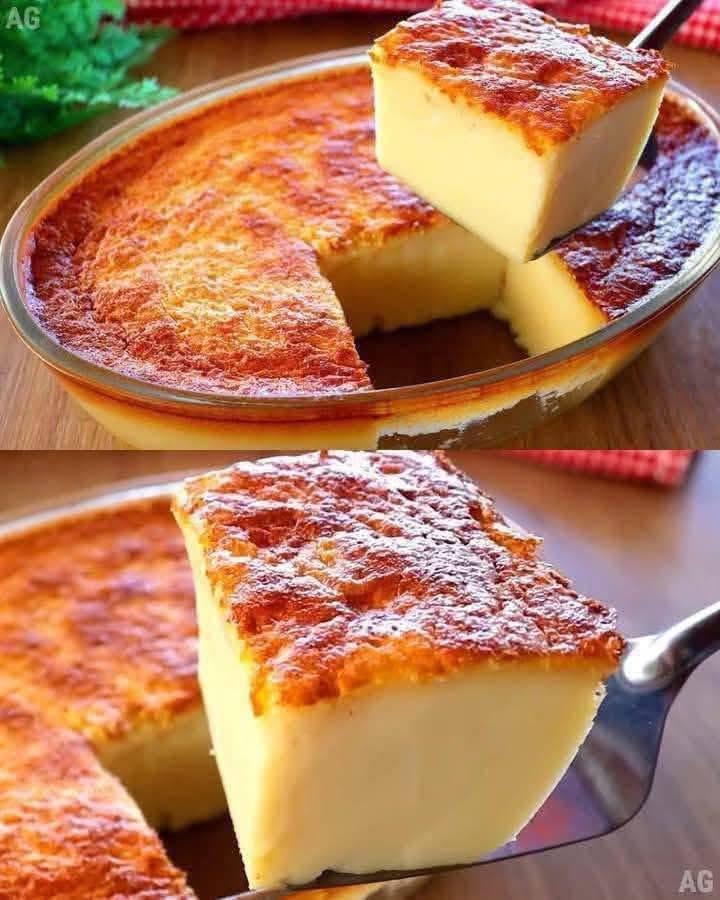
Creamy Blender Custard Cake 🍰✨
Introduction
Welcome to one of the easiest and most delicious homemade desserts you can prepare in your kitchen.
This Creamy Blender Custard Cake is a wonderfully simple, crustless dessert with a beautifully golden top and a soft, creamy, pudding-like center.
The batter comes together quickly in a blender, making this recipe perfect for busy bakers, beginners, and anyone looking for an impressive dessert without complicated techniques.
Serve it slightly warm, chilled, or at room temperature with a dusting of powdered sugar for a simple and elegant finish.
Recipe Overview
| Detail | Information |
| Prep Time | 10 minutes |
| Cook Time | 50 minutes |
| Cooling Time | 30 minutes |
| Total Time | 1 hour 30 minutes |
| Servings | 8 servings |
| Category | Dessert / Cake |
| Cuisine | Homemade / European-Inspired |
| Diet | Vegetarian |
| Difficulty | Easy |
Why You’ll Love This Recipe
This cake is incredibly easy because the batter is prepared almost entirely in a blender.
The simple combination of eggs, milk, flour, sugar, butter, and vanilla creates a wonderfully rich custard-like texture as it bakes.
The finished cake develops a lightly caramelized golden surface while the center remains soft and creamy.
It is also an affordable dessert because it uses basic pantry and refrigerator ingredients.
Ingredients
🥛 Custard Cake Batter
| Ingredient | Quantity | Notes |
| Whole milk | 3 cups | Slightly warmed |
| Large eggs | 4 | Room temperature |
| Granulated sugar | 1 cup | Regular white sugar |
| All-purpose flour | ¾ cup | Sifted |
| Unsalted butter | 4 tablespoons | Melted and slightly cooled |
| Vanilla powder | 1 teaspoon | Vanilla extract can also be used |
| Salt | ¼ teaspoon | Balances the sweetness |
🧈 For Greasing
| Ingredient | Quantity |
| Unsalted butter | 1 teaspoon |
✨ Optional Toppings
| Ingredient | Quantity |
| Powdered sugar | 1–2 tablespoons |
| Fresh berries | As desired |
| Whipped cream | As desired |
| Fresh fruit | As desired |
| Caramel sauce | Optional |
Step-by-Step Instructions
Prepare the Baking Dish
Preheat your oven to 350°F (175°C).
Grease a 9-inch round or oval baking dish generously with the teaspoon of butter.
For easier cleanup, you can also place the baking dish on a baking sheet before filling it.
Warm the Milk
Warm the milk slightly until it is lukewarm.
Do not boil the milk.
Slightly warm milk blends more easily with the other ingredients and helps the batter come together smoothly.
Blend the Eggs and Sugar
Add the room-temperature eggs, granulated sugar, melted butter, vanilla powder, and salt to a high-powered blender.
Blend for approximately 1–2 minutes until the mixture is pale, smooth, and lightly frothy.
Add the Flour
Add the sifted flour to the blender.
Pulse several times until the flour is completely incorporated.
Do not over-blend once the flour has been added.
Add the Milk
Pour the slightly warmed milk into the blender gradually.
Blend on low speed for approximately 20–30 seconds, just until the batter becomes completely smooth.
The batter will be much thinner than traditional cake batter.
This is completely normal and is essential for creating the custard-like center.
Pour Into the Dish
Carefully pour the batter into the prepared baking dish.
If you notice a large amount of foam on the surface, allow the batter to sit for approximately 2 minutes before baking.
Bake the Cake
Place the baking dish in the center of the preheated oven.
Bake for approximately 45–55 minutes.
The surface should become golden brown and the edges should appear set.
The center may still have a slight wobble when the dish is gently moved.
Do not wait until the center becomes completely firm, because the custard will continue setting as it cools.
Cool
Remove the cake from the oven and place it on a cooling rack.
Allow it to cool for at least 30 minutes.
The center will continue to set during this time.
For a firmer custard texture, refrigerate the cake for approximately 2 hours before slicing.
Serve
Dust the cooled cake lightly with powdered sugar.
Slice into wedges and serve.
You can enjoy it at room temperature or chilled.
Fresh berries, whipped cream, or a small drizzle of caramel sauce make wonderful additions.
Best Tips
Use room-temperature eggs: They blend more easily and help create a smoother batter.
Do not over-blend the flour: Once the flour is incorporated, stop blending to avoid developing excess gluten.
Do not overbake: The center should have a slight wobble when the cake comes out of the oven.
Use whole milk: The higher fat content contributes to the creamy custard texture.
Allow the cake to cool: The interior becomes firmer as it cools.
Bake in the center of the oven: This encourages even cooking and prevents the top from browning too quickly.
Best Ingredient Options
Whole milk provides the richest texture, but 2% milk can be used if necessary.
Fresh eggs produce the best structure and flavor.
For the vanilla, vanilla extract can replace vanilla powder. Use approximately 2 teaspoons of pure vanilla extract.
Freshly grated vanilla bean can also be used for a more pronounced vanilla flavor.
For an extra luxurious dessert, replace ½ cup of the milk with heavy cream.
Recipe Variations
🍋 Lemon Custard Cake
Add 1 tablespoon of finely grated lemon zest and 1 tablespoon of fresh lemon juice to the batter.
The citrus adds a bright flavor that balances the sweetness.
🍫 Chocolate Custard Cake
Replace 2 tablespoons of the flour with 2 tablespoons of unsweetened cocoa powder.
Add an extra tablespoon of sugar if you prefer a sweeter chocolate flavor.
🥥 Coconut Custard Cake
Replace 1 cup of the whole milk with canned coconut milk.
Add ½ cup of unsweetened shredded coconut for additional texture.
🍓 Berry Custard Cake
Add a handful of fresh raspberries or blueberries to the batter immediately before baking.
Avoid adding too many berries because their moisture can affect the final texture.
🍊 Orange Vanilla Custard Cake
Add 1 tablespoon of orange zest and use vanilla extract for a fragrant citrus-vanilla combination.
What to Serve With
This creamy custard cake is delicious on its own, but several simple toppings make it even more special.
Serve it with fresh strawberries, raspberries, blueberries, or sliced peaches.
A spoonful of lightly sweetened whipped cream adds an airy contrast to the dense custard.
For a more indulgent dessert, drizzle individual slices with caramel sauce or chocolate sauce.
A cup of coffee, espresso, or tea also pairs beautifully with the vanilla flavor.
Make-Ahead Instructions
This cake is ideal for making ahead.
Prepare and bake the cake according to the recipe.
Allow it to cool completely, then cover it and refrigerate.
It can be prepared approximately 1 day in advance.
In fact, chilling the cake overnight gives the custard additional time to set and makes it easier to slice neatly.
Storage
Allow the cake to cool completely before storing it.
Cover the baking dish tightly with plastic wrap or transfer individual slices to airtight containers.
Keep refrigerated for up to 4 days.
Because this dessert contains eggs and milk, it should remain refrigerated rather than being left at room temperature for extended periods.
Reheating
This dessert can be enjoyed cold, at room temperature, or slightly warm.
For a warm serving, place an individual slice in the microwave and heat for approximately 10–15 seconds.
Avoid overheating because excessive heat can cause the custard texture to become rubbery.
For the best traditional custard texture, serving it chilled is highly recommended.
Freezing
Freezing is possible, but it is not the preferred storage method because the creamy custard texture can become slightly watery or grainy after thawing.
If you decide to freeze it, wrap individual slices tightly and place them in a freezer-safe container.
Freeze for up to 1 month.
Thaw overnight in the refrigerator before serving.
Common Mistakes to Avoid
Using cold milk: Extremely cold milk can make the melted butter solidify when combined with it. Slightly warm milk works better.
Adding too much flour: Extra flour will make the cake dense and reduce the creamy custard texture.
Overmixing: Once the flour is incorporated, stop blending.
Overbaking: A completely firm center straight from the oven usually means the cake has been baked too long.
Cutting immediately: Give the cake time to cool so the custard can finish setting.
Using a very large baking dish: A larger dish creates a thinner cake and can significantly reduce the baking time.
Skipping the greasing step: Even though the cake is crustless, buttering the dish makes serving much easier.
Nutrition Estimate
Approximate values per serving and may vary depending on the exact ingredients and portion size.
| Nutrient | Amount per Serving |
| Calories | 285 kcal |
| Carbohydrates | 39 g |
| Protein | 7 g |
| Fat | 11 g |
| Saturated Fat | 6 g |
| Sodium | 150 mg |
| Fiber | 0.5 g |
| Sugar | 25 g |
Frequently Asked Questions
Why is my custard cake still jiggly?
A slight wobble in the center is normal when the cake first comes out of the oven.
The custard continues cooking from residual heat and becomes firmer as it cools.
If the entire cake looks completely liquid rather than gently jiggly, it needs additional baking time.
Can I use vanilla extract instead of vanilla powder?
Yes.
Use approximately 2 teaspoons of pure vanilla extract in place of the vanilla powder.
Can I make this cake without a blender?
Absolutely.
Whisk the eggs and sugar together in a large bowl.
Add the melted butter and vanilla, then gradually whisk in the flour.
Slowly incorporate the milk until the batter is smooth.
Can I use a different baking dish?
Yes.
A similar-sized ceramic, glass, or metal baking dish can work.
However, changing the dimensions of the dish will change the thickness of the cake and therefore the baking time.
Should I refrigerate the cake?
Yes.
Because the recipe contains eggs and milk, refrigeration is recommended once the cake has cooled.
Why did my cake crack on top?
A few small cracks can occur naturally as the custard cake expands and contracts during baking and cooling.
Overbaking or using excessive oven heat can also encourage cracking.
Can I make it less sweet?
Yes.
You can reduce the sugar slightly, although a substantial reduction may change the final texture.
For a moderately less-sweet cake, try using ¾ cup sugar instead of 1 cup.
Final Thoughts
This Creamy Blender Custard Cake proves that an impressive homemade dessert does not need complicated techniques or expensive ingredients.
With a handful of everyday ingredients and a blender, you can create a golden, beautifully creamy dessert with a soft custard center and delicate vanilla flavor.
Serve it chilled with powdered sugar and fresh berries, or enjoy a warm slice with your favorite cup of coffee.
It is simple, comforting, budget-friendly, and perfect for sharing with family and friends.