Introduction
A badly burnt rice pot can look almost impossible to save, especially when a thick black layer has hardened across the bottom. The good news is that you can often loosen stubborn burnt-on rice with a simple cleaning routine using water, white vinegar, dish soap, and baking soda.
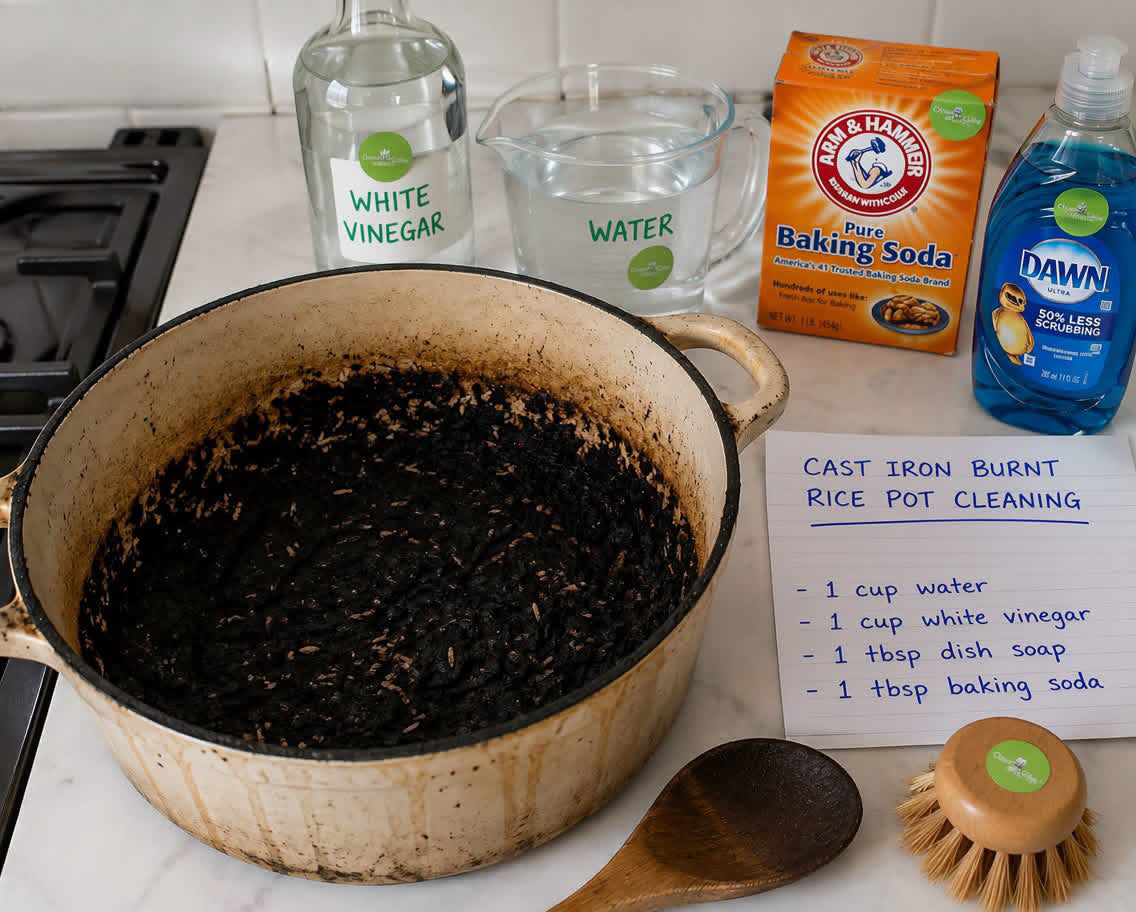
The method shown in the image combines common household cleaning ingredients to help break down and lift stubborn food residue. For best results, however, the ingredients should be used in stages rather than simply mixed together, because vinegar and baking soda largely neutralize each other when combined.
This practical cast iron cleaning method is especially useful for restoring cookware after a difficult kitchen accident while minimizing unnecessary scrubbing.
Recipe Overview
| Feature | Details |
| 🧽 Cleaning Method | Burnt Rice Pot Cleaning |
| ⏱️ Active Cleaning Time | 15–25 minutes |
| 🔥 Heating Time | 5–10 minutes |
| ⏳ Soaking Time | 15–30 minutes, if needed |
| 🧴 Difficulty | Easy to Moderate |
| 🥘 Best For | Burnt rice and stubborn food residue |
| 🧹 Equipment | Soft brush, sponge, wooden or silicone utensil |
| 🌿 Ingredients | Water, white vinegar, dish soap, baking soda |
Why You’ll Love This Cleaning Method
Simple household ingredients
You don’t need a complicated collection of specialized cleaning products. The method uses ingredients that are commonly kept in the kitchen or laundry cupboard.
Useful for stubborn burnt residue
Gentle heating and soaking can soften hardened rice and food residue, making the remaining layer considerably easier to remove.
Less aggressive scrubbing
Instead of immediately attacking the pot with excessive force, this method focuses on loosening the burnt layer first.
Budget-friendly cleaning solution
Water, white vinegar, dish soap, and baking soda are inexpensive household staples, making this an economical cookware cleaning option.
Easy to adapt
You can increase or decrease the quantities depending on the size of the pot and the amount of burnt residue.
Ingredients
For the Initial Cleaning
| Ingredient | Amount | Purpose |
| 💧 Water | 1 cup | Helps soften burnt residue |
| 🥛 White vinegar | 1 cup | Helps loosen mineral and food deposits |
| 🧼 Dish soap | 1 tbsp | Helps remove grease and food residue |
| 🥄 Baking soda | 1 tbsp | Provides mild abrasive cleaning action |
Equipment
| Item | Recommended Option |
| 🧽 Sponge | Non-abrasive sponge |
| 🪥 Brush | Soft or medium cookware brush |
| 🥄 Scraper | Wooden or silicone utensil |
| 🧤 Gloves | Optional for household cleaning |
| 🧺 Towel | Clean, dry kitchen towel |
Step-by-Step Instructions
Remove Loose Burnt Rice
Allow the pot to cool enough to handle safely.
Use a wooden or silicone utensil to gently remove any loose pieces of burnt rice from the bottom.
Avoid aggressively scraping an enameled surface with metal utensils, because they can scratch or chip the coating.
Add Water and Vinegar
Pour 1 cup of water and 1 cup of white vinegar into the pot.
If the burnt area is larger than the liquid can cover, add enough additional water to keep the affected area submerged.
Heat Gently
Place the pot over low to medium heat.
Bring the liquid to a gentle simmer and maintain it for approximately 5–10 minutes.
The warm liquid helps soften the hardened food residue.
Do not allow the pot to boil dry.
Turn Off the Heat
Turn off the stove and allow the pot to cool slightly.
While the liquid is still warm, carefully work around the softened residue with a wooden or silicone utensil.
You may notice pieces of burnt rice beginning to lift away from the bottom.
Add Dish Soap
Pour 1 tablespoon of dish soap into the pot.
Use a soft sponge or cookware brush to gently work over the remaining residue.
For particularly stubborn areas, allow the soapy water to sit for approximately 15–30 minutes before scrubbing again.
Use Baking Soda Separately
Drain and rinse the pot.
Sprinkle approximately 1 tablespoon of baking soda over the remaining stubborn areas.
Add a small amount of water to create a thick paste.
Gently scrub the paste over the affected areas using a non-abrasive sponge or suitable cookware brush.
The baking soda provides mild abrasive action that can help lift remaining residue.
Rinse Thoroughly
Rinse the pot several times with clean water.
Make sure all vinegar, soap, baking soda, and loosened food residue have been removed.
Dry Immediately
Dry the cookware thoroughly with a clean towel.
If the cookware is traditional uncoated cast iron, make sure it is completely dry before storage to reduce the risk of rust.
If it is enameled cast iron, follow the manufacturer’s care instructions and avoid treating the enamel as bare cast iron.
Practical Tips
Don’t attack the burnt layer immediately with aggressive scrubbing. Softening the residue first can make the cleaning process much easier.
Never heat an empty pot while attempting this cleaning method. Always make sure there is sufficient liquid in the cookware.
Avoid sudden temperature changes. Pouring cold water into extremely hot cookware can cause thermal shock and, depending on the cookware material, may damage the surface.
For a very thick burnt layer, repeat the soaking and gentle scrubbing process instead of trying to remove everything in one attempt.
Do not use harsh metal tools on an enamel coating.
Best Ingredient Alternatives
Apple Cider Vinegar
Apple cider vinegar can technically provide acidity similar to white vinegar, but white vinegar is preferable for household cleaning because it is inexpensive and does not contain the coloring found in some other vinegars.
Mild Unscented Dish Soap
A mild dishwashing liquid can be substituted for the dish soap shown in the image.
Washing Soda
Washing soda is substantially more alkaline than baking soda and is more aggressive as a household cleaner. It should not automatically be substituted, particularly on delicate or coated cookware.
For enameled cookware, sticking with baking soda is the gentler choice.
Recipe Variations
Baking Soda Cleaning Paste
For smaller burnt spots, skip the heating stage and make a paste from baking soda and a small amount of water.
Apply it to the affected area and allow it to sit before gently scrubbing.
Dish Soap Soak
For moderately stuck-on rice, fill the pot with warm water and add dish soap.
Allow it to soak for several hours before cleaning.
This is a particularly gentle option when you want to avoid prolonged exposure to acidic cleaners.
Simmer-and-Scrape Method
For severe food buildup, simmer plain water in the pot and gently loosen the residue with a wooden utensil as it softens.
This method avoids introducing an acid to the cookware.
What to Do After Cleaning
Once the burnt residue has been removed, rinse the cookware thoroughly and dry it completely.
For bare cast iron, a very thin coating of cooking oil can help maintain the seasoned surface after cleaning.
For enameled cast iron, do not automatically apply an oil seasoning layer to the enamel. Follow the manufacturer’s maintenance instructions instead.
Preparation in Advance
This is not a recipe that needs traditional meal preparation, but you can make the cleaning process easier by preparing your equipment beforehand.
Have the water, vinegar, dish soap, baking soda, sponge, brush, wooden utensil, and drying towel ready before beginning.
For particularly stubborn residue, allowing the cookware to soak after the heating stage can reduce the amount of manual scrubbing required.
Storage
Store cleaning ingredients in their original, clearly labeled containers.
Keep baking soda and vinegar in dry, sealed storage areas and away from children and pets.
Do not store the cleaning mixture in a closed container after combining ingredients.
Reheating
There is no reheating step after cleaning.
If you need to repeat the process, allow the cookware to cool to a safe temperature before starting another cleaning cycle.
Freezing
Freezing is not applicable to this cleaning method.
Do not intentionally freeze cookware containing cleaning liquids, as expansion and temperature changes can damage certain materials.
Common Mistakes to Avoid
Mixing Vinegar and Baking Soda at the Same Time
Although the bubbling reaction looks powerful, combining them immediately causes an acid-base reaction that substantially neutralizes both ingredients.
For this method, use the water and vinegar first, rinse, and then use the baking soda separately.
Scrubbing Too Hard
Aggressive scrubbing can damage enamel or remove seasoning from traditional cast iron.
Start gently and increase the effort only when necessary.
Using Metal Scrapers on Enamel
Metal tools can scratch or chip an enamel coating.
Use wood, silicone, or another cookware-safe utensil instead.
Leaving Vinegar on Cast Iron for Too Long
Acidic solutions can affect the seasoning of bare cast iron.
Use vinegar for a short, controlled cleaning session rather than leaving the cookware submerged in vinegar for hours.
Allowing the Pot to Boil Dry
Never leave the pot unattended while heating the cleaning solution.
Keep enough liquid in the pot throughout the process.
Estimated Nutrition
Because this is a cookware cleaning method and not food, it has no nutritional value.
| Nutritional Information | Amount |
| Calories | 0 kcal |
| Protein | 0 g |
| Carbohydrates | 0 g |
| Fat | 0 g |
| Fiber | 0 g |
| Sugar | 0 g |
Important: None of the cleaning ingredients should be consumed.
Frequently Asked Questions
Can I use this method on a cast iron pot?
Yes, but the treatment depends on the type of cast iron. Bare cast iron and enameled cast iron require different care.
Can I leave the vinegar mixture overnight?
It is better not to, particularly with bare cast iron. Prolonged exposure to vinegar can affect the seasoning and may contribute to corrosion.
Why shouldn’t I mix vinegar and baking soda?
They react immediately, producing carbon dioxide and water while neutralizing much of their cleaning chemistry. Using them separately is more practical for this type of cleaning.
What if the burnt rice doesn’t come off?
Repeat the gentle heating, soaking, and brushing process. Severe carbonized residue may require several cleaning cycles.
Can I use steel wool?
For bare cast iron, appropriate steel wool can sometimes be used when restoring heavily carbonized cookware, but it can remove seasoning. It should generally be avoided on enameled surfaces because it can scratch the finish.
Should I oil the pot after cleaning?
For traditional bare cast iron, applying a very thin layer of cooking oil after completely drying the cookware can help maintain the seasoned surface. Enameled cast iron does not require traditional seasoning of its enamel coating.
Conclusion
A severely burnt rice pot doesn’t necessarily need to be thrown away. A combination of gentle heating, soaking, dish soap, and baking soda can help loosen stubborn residue while reducing the need for harsh scrubbing.
The key is to use the vinegar and baking soda separately, protect the cookware’s surface, and adjust the cleaning approach according to whether the pot is bare cast iron or enameled cast iron. With patience and the right technique, even heavily burnt cookware can often be brought back to a much cleaner condition.