Introduction
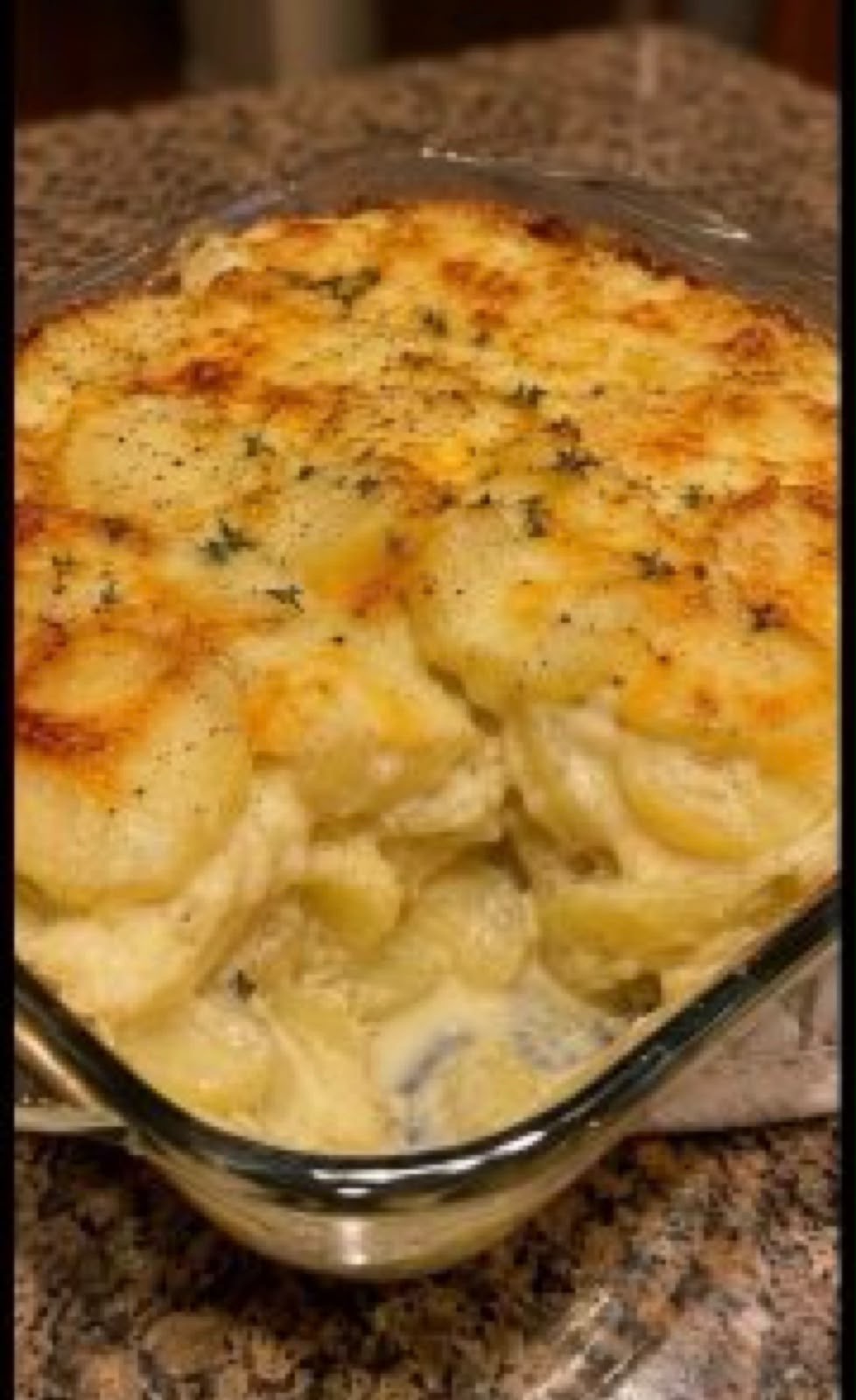
There is nothing quite like a bubbling dish of Potatoes Au Gratin coming out of the oven with a golden, cheesy crust.
This classic comfort food combines thinly sliced potatoes with a rich garlic cream sauce, sharp cheddar, and Gruyère or mozzarella.
The potatoes slowly bake until tender while the creamy sauce works its way between every layer.
The result is an indulgent easy potato casserole that is perfect for family dinners, holiday meals, Sunday roasts, and special occasions.
Recipe Overview
| Detail | Specification |
| Prep Time | 20 minutes |
| Cook Time | 1 hour 10 minutes |
| Resting Time | 10–15 minutes |
| Total Time | 1 hour 40 minutes |
| Servings | 6–8 servings |
| Course | Side Dish |
| Cuisine | French-inspired |
| Difficulty | Easy |
Why You’ll Love This Recipe
These cheesy scalloped potatoes are creamy, comforting, and incredibly satisfying.
The thin potato slices cook directly in a rich garlic cream sauce, creating tender layers with every bite.
Sharp cheddar provides bold flavor, while Gruyère adds a beautifully creamy and slightly nutty finish.
The golden cheese topping makes this potato casserole especially appealing for holiday dinners and entertaining.
It is also easy to prepare ahead, making it a convenient make-ahead side dish for busy occasions.
Ingredients
Potatoes
| Ingredient | Amount |
| Yukon Gold or Russet potatoes, peeled | 3 lbs (about 1.4 kg) |
| Fresh thyme leaves | 1 tablespoon |
| Salt | 1 teaspoon |
| Freshly cracked black pepper | ½ teaspoon |
Garlic Cream Sauce
| Ingredient | Amount |
| Unsalted butter | 3 tablespoons |
| Garlic, finely minced | 3 cloves |
| All-purpose flour | 3 tablespoons |
| Whole milk | 1 cup |
| Heavy whipping cream | 1 cup |
| Onion powder | 1 teaspoon |
| Nutmeg | Pinch, optional |
Cheese Topping
| Ingredient | Amount |
| Sharp cheddar, freshly grated | 1½ cups |
| Gruyère or mozzarella, freshly grated | 1 cup |
| Fresh thyme | For garnish |
Step-by-Step Instructions
Prepare the Oven
Preheat your oven to 400°F (200°C).
Generously grease a 9 × 9-inch or 2-quart baking dish with butter or non-stick spray.
Set the dish aside.
Prepare the Potatoes
Peel the potatoes and rinse them thoroughly.
Slice them into approximately ⅛-inch (3 mm) rounds.
Try to keep the slices as uniform as possible.
A mandoline slicer can make this process much easier, but use caution when handling it.
Do not soak the sliced potatoes for an extended period because excess water can dilute the sauce.
Make the Garlic Cream Sauce
Melt the butter in a medium saucepan over medium heat.
Add the minced garlic.
Cook for approximately 30 seconds, stirring constantly.
The garlic should become fragrant without turning brown.
Add the flour.
Whisk continuously for approximately 1 minute.
This creates the roux that will thicken the cream sauce.
Add the Milk and Cream
Gradually pour the whole milk into the saucepan while whisking constantly.
Slowly add the heavy cream.
Continue whisking until the sauce is completely smooth.
Add the onion powder, salt, black pepper, and optional nutmeg.
Bring the mixture to a gentle simmer.
Cook for approximately 2–3 minutes, stirring frequently.
The sauce should become thick enough to coat the back of a spoon.
Remove from the heat.
Assemble the First Layer
Spread a thin layer of the cream sauce across the bottom of the prepared baking dish.
Arrange approximately half of the sliced potatoes in overlapping layers.
Try to distribute them evenly throughout the dish.
Sprinkle a small amount of the fresh thyme over the potatoes.
Add the Cream and Cheese
Pour some of the cream sauce over the first potato layer.
Spread it evenly so the potatoes are well coated.
Sprinkle approximately half of the shredded cheddar and half of the Gruyère or mozzarella over the layer.
Add the remaining potato slices.
Arrange them in another overlapping pattern.
Pour the remaining cream sauce over the potatoes.
Use the back of a spoon to distribute the sauce evenly.
Finish with the remaining cheddar and Gruyère or mozzarella.
Make sure the cheese covers the surface as evenly as possible.
Cover and Bake
Cover the baking dish tightly with aluminum foil.
Place it in the preheated 400°F (200°C) oven.
Bake for approximately 45 minutes.
The foil traps steam, helping the potatoes cook evenly.
Finish Baking
Carefully remove the foil.
Return the dish to the oven.
Continue baking uncovered for approximately 20–25 minutes.
The potatoes should be completely tender when pierced with a thin knife.
The cheese should be bubbling and beautifully golden brown.
If you want a deeper golden crust, broil for 1–2 minutes at the end.
Watch carefully because the cheese can burn quickly under the broiler.
Rest Before Serving
Remove the potatoes from the oven.
Allow them to rest for 10–15 minutes.
This gives the creamy sauce time to settle and makes the layers easier to serve.
Garnish with fresh thyme before serving.
Best Tips
Slice the potatoes as evenly as possible.
Uniform slices cook at the same rate and prevent some pieces from becoming overcooked while others remain firm.
Freshly grated cheese generally melts more smoothly than pre-shredded cheese.
Do not rush the cream sauce.
Allowing the roux to cook briefly before adding the dairy helps develop a smoother sauce.
Make sure the potatoes are well covered with sauce before baking.
Exposed potato slices can become dry during cooking.
Keep the dish covered for the first part of baking.
This creates the steam needed to soften the potatoes.
Always test the center of the casserole with a knife before removing it from the oven.
The potatoes should be completely tender.
Best Ingredient Options
Yukon Gold potatoes are an excellent choice because they have a naturally creamy texture and hold their shape well.
Russet potatoes work beautifully too and tend to create a softer, starchier casserole.
For the cheese, sharp cheddar provides strong flavor.
Gruyère adds richness and a subtle nutty taste.
Mozzarella can be used when you want a milder flavor and especially stretchy cheese.
For a richer sauce, use full-fat milk and heavy cream.
Fresh thyme provides a wonderful herbal flavor, but rosemary or fresh parsley can also be used.
Recipe Variations
Garlic Parmesan Potatoes Au Gratin
Replace part of the cheddar with freshly grated Parmesan.
Add an extra clove of garlic for a stronger garlic flavor.
Bacon-Free Loaded Potatoes
Add sautéed mushrooms, caramelized onions, and extra cheese for a hearty vegetarian variation.
Spicy Cheesy Potatoes
Add a pinch of cayenne pepper or crushed red pepper flakes to the cream sauce.
Pepper jack cheese can also replace part of the cheddar.
Herb Potatoes Au Gratin
Add fresh rosemary, thyme, and parsley between the potato layers.
The fresh herbs complement the creamy sauce beautifully.
Three-Cheese Potatoes
Use cheddar, Gruyère, and Parmesan together.
This creates an especially rich and flavorful cheese crust.
What to Serve With
Potatoes Au Gratin make an excellent side dish for roasted chicken or turkey.
They are also delicious alongside grilled or roasted beef.
Serve them with roasted green beans, asparagus, or steamed broccoli for a balanced dinner.
A crisp green salad can provide a fresh contrast to the rich cream sauce.
For holiday meals, these cheesy potatoes pair especially well with roasted meats, vegetables, and a simple homemade gravy.
Make-Ahead Instructions
You can prepare the cream sauce several hours ahead of time.
Store it covered in the refrigerator and gently warm it before assembling the casserole.
You can also assemble the casserole a few hours before baking.
Cover it tightly and refrigerate until ready to cook.
Because the potatoes will be cold, you may need to add approximately 10–15 minutes to the covered baking time.
For the best results, avoid slicing the potatoes too far in advance without sauce because they can discolor.
Storage
Allow leftover potatoes to cool before transferring them to an airtight container.
Store them in the refrigerator for approximately 3–4 days.
Keep the leftovers properly refrigerated.
The sauce may thicken after chilling, but it becomes creamy again when reheated.
Reheating
For individual portions, microwave on medium power until heated through.
For the best texture, place the potatoes in an oven-safe dish.
Cover loosely with foil and reheat at 350°F (175°C) for approximately 15–20 minutes.
Remove the foil during the final few minutes to help restore the golden cheese topping.
If the potatoes appear dry, add a small splash of milk or cream before reheating.
Freezing
Potatoes Au Gratin can technically be frozen, although the cream sauce may change slightly in texture after thawing.
For best quality, freeze fully cooked and cooled portions in airtight freezer-safe containers.
Use within approximately 1–2 months.
Thaw overnight in the refrigerator before reheating.
Reheat covered at 350°F (175°C) until completely hot.
Common Mistakes to Avoid
Do not slice the potatoes too thick.
Thick slices require considerably longer cooking and may remain firm in the center.
Avoid using uneven potato slices.
Different thicknesses can result in uneven cooking.
Do not skip the roux when using this cream sauce.
The flour helps create the creamy consistency needed to coat the potatoes.
Avoid adding all the cheese only to the top.
Layering some cheese between the potatoes creates better flavor throughout the casserole.
Do not uncover the dish too early.
The covered baking stage helps the potatoes cook through in the creamy sauce.
Avoid removing the casserole before testing the potatoes.
The center should be completely tender when pierced with a knife.
Finally, allow the casserole to rest before serving.
This helps the sauce thicken slightly and makes the dish easier to portion.
Nutrition Estimate
The following values are approximate and will vary depending on the exact ingredients and serving size.
| Nutrient | Approx. Per Serving |
| Calories | 430–480 kcal |
| Protein | 13–16 g |
| Carbohydrates | 38–43 g |
| Total Fat | 26–30 g |
| Saturated Fat | 15–18 g |
| Fiber | 4–5 g |
| Sugar | 4–6 g |
| Sodium | 600–750 mg |
| Calcium | 300–400 mg |
Frequently Asked Questions
What type of potatoes are best for au gratin?
Yukon Gold potatoes are excellent because they become creamy while maintaining their shape.
Russet potatoes are another great option and produce a softer, starchier texture.
Can I make Potatoes Au Gratin without flour?
Yes.
You can use a cream-based sauce without a traditional roux, although the finished texture will be somewhat different.
The natural starch from the potatoes can help thicken the sauce.
Why are my potatoes still hard?
The slices may be too thick, the baking time may be insufficient, or the oven temperature may be inaccurate.
Cover the dish again and continue baking until the center is tender.
Can I use only mozzarella?
Yes.
Mozzarella creates a mild flavor and excellent melting texture.
For a stronger flavor, combine it with cheddar, Parmesan, or Gruyère.
Can I prepare this dish the day before?
Yes.
Assemble the casserole, cover it tightly, and refrigerate it.
Add some additional baking time because the potatoes will be chilled.
Why is my sauce watery?
Excess liquid can result from insufficiently thickened sauce or excessive moisture from the potatoes.
Make sure the roux is cooked properly and the cream sauce has thickened before assembling.
How do I make the top extra crispy?
Bake uncovered until the cheese is golden.
For an even crispier finish, broil for 1–2 minutes at the end while watching the dish carefully.
Can I use sweet potatoes?
Yes, although the flavor will be noticeably sweeter.
Sweet potatoes can be combined with regular potatoes for an interesting variation.
Final Thoughts
These Potatoes Au Gratin are the ultimate creamy, cheesy comfort food side dish.
Thinly sliced potatoes are layered with a rich garlic cream sauce and plenty of melted cheese before being baked until tender and beautifully golden.
The combination of sharp cheddar and Gruyère creates an irresistible crust while the cream sauce keeps the potato layers rich and tender.
Whether you are preparing a holiday side dish, Sunday dinner, family meal, or elegant dinner-party menu, this recipe is guaranteed to be a crowd-pleaser.
Serve it warm with roasted meat, fresh vegetables, or a crisp salad for a comforting homemade meal.