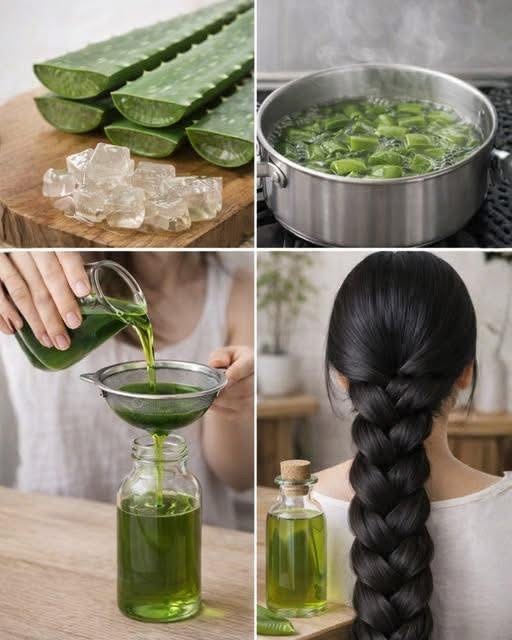
Homemade Aloe Vera Infused Oil for Scalp & Hair
Introduction
Aloe vera is widely used in scalp care for its soothing and moisturizing properties. When infused into a nourishing carrier oil, it can help soften dry hair, support scalp comfort, and reduce breakage. While it does not “cure” hair loss, it may improve scalp condition — which is an important foundation for healthy-looking hair.
Ingredients
1 large fresh aloe vera leaf
1 cup carrier oil (coconut, extra virgin olive oil, or sweet almond oil)
5–10 drops essential oil (optional — rosemary or lavender)
1 vitamin E capsule (optional, antioxidant support)
Important Safety Note (Before You Start)
Fresh aloe contains water. Water + oil can increase the risk of spoilage or microbial growth if not prepared properly. To make a safer oil infusion:
• Use fully dried aloe pieces, or
• Use pure aloe gel that has been dehydrated, or
• Keep the finished oil refrigerated and use within 1–2 weeks
Never store homemade aloe oil at room temperature for long periods if fresh gel was used.
Instructions
1. Wash & Prepare
Rinse the aloe leaf thoroughly. Trim off spines.
2. Remove the Latex
Allow the yellow sap (aloin/latex) to drain for 10–15 minutes. This reduces irritation risk.
3. Extract Gel
Scoop out the clear gel only (avoid the green skin if you have sensitive skin).
4. Reduce Moisture (Recommended Step)
Blend the gel and gently heat it alone on low for several minutes to evaporate excess water before adding oil. Stir continuously.
5. Infuse
Add carrier oil to the aloe mixture. Heat on very low for 30–45 minutes. Do not allow it to smoke.
6. Cool & Strain
Let cool completely. Strain thoroughly using cheesecloth into a sterilized glass bottle.
7. Add Extras
Stir in vitamin E and essential oils if using.
Store in the refrigerator and use within 1–2 weeks for best safety.
How to Apply
Massage a small amount into the scalp for 5 minutes using circular motions.
Distribute lightly through hair lengths.
Leave on 30 minutes or overnight (protect pillowcase).
Shampoo thoroughly (you may need two washes).
Use 1–2 times per week.
Variations
Rosemary Infusion
Add dried rosemary during the oil infusion (avoid fresh unless fully dried first).
Castor Oil Blend
Mix 1/4 cup castor oil with 3/4 cup lighter oil (castor is very thick).
Fenugreek Option
Use dried fenugreek seeds only, and strain very well.
What Aloe Actually Does (Evidence-Based)
• Soothes irritated scalp
• Provides light hydration
• Contains antioxidants (vitamins A, C, E in small amounts)
• May help reduce visible flaking
There is limited strong clinical evidence that aloe alone regrows hair, but improving scalp health can support stronger strands and reduce breakage.
Tips
Always patch test before first use.
Avoid essential oils if pregnant or if you have a sensitive scalp.
If you notice itching, redness, or odor change in the oil, discard immediately.
Consistency matters — visible improvements usually relate to reduced breakage, not new follicle creation.
Healthy Scalp Support
Hair growth depends on:
• Nutrition (protein, iron, zinc, B vitamins)
• Hormonal balance
• Stress management
• Scalp circulation
• Medical conditions (thyroid, anemia, etc.)
Topical oils can support moisture — but internal health plays a larger role.
Conclusion
Aloe-infused oil can be a nourishing addition to your hair routine when prepared safely. It helps moisturize the scalp and reduce dryness-related breakage. While it won’t reverse genetic hair loss, it can contribute to healthier-looking, shinier hair with regular use.
This recipe may not be suitable for everyone, so it is advisable to consult a doctor.